

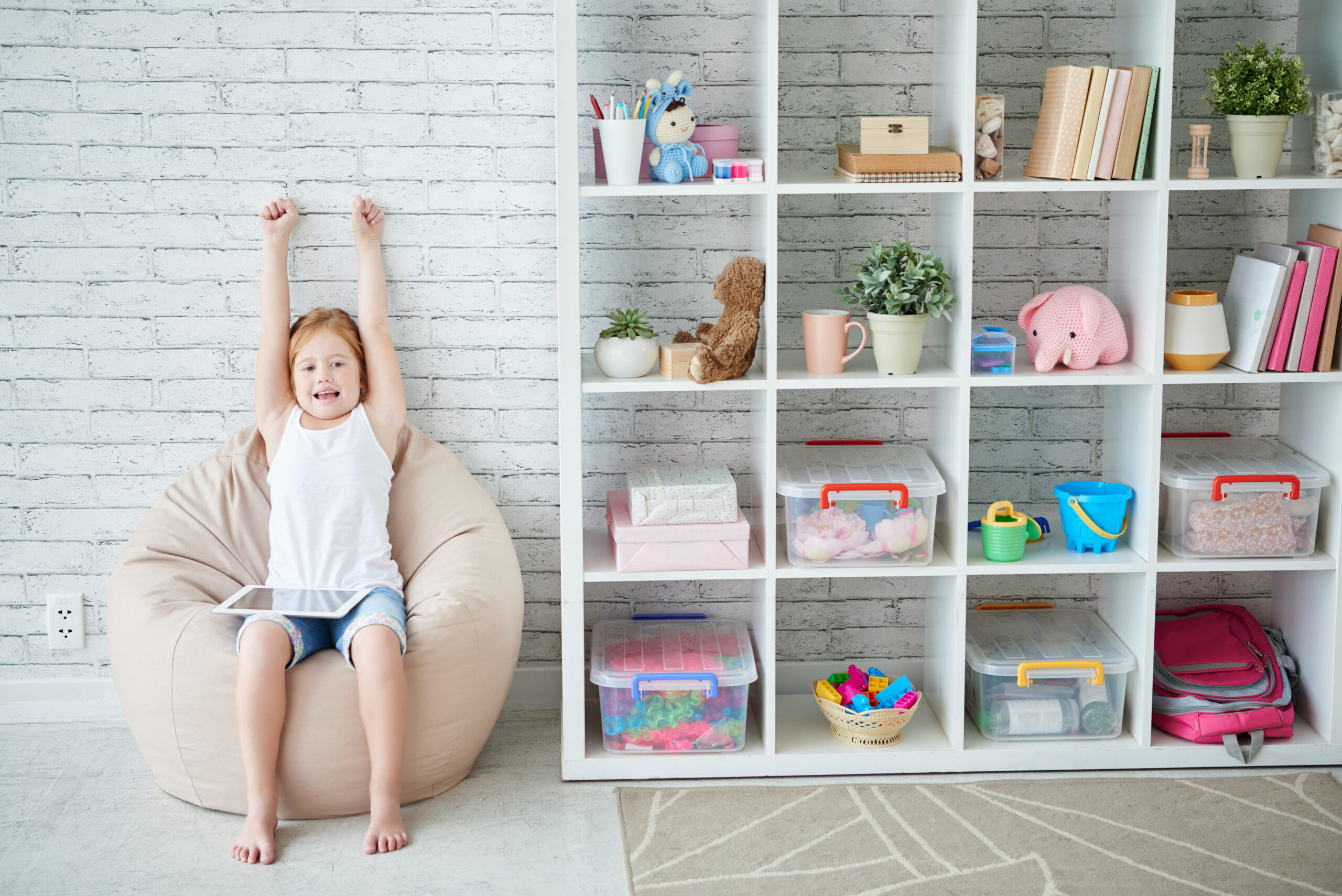
A kids’ room does not need to stay spotless to be organized.
Clothes will end up on the floor. Toys will come out. School papers will accumulate. Sports, hobbies, and routines will change throughout the year.
If you are figuring out how to organize a kids’ room, start with a system your child can understand, use, and reset when the room gets messy.
That means clear zones, accessible storage, and simple rules for where things belong.
For more ideas on creating practical systems throughout the home, see our guide to South Florida home organization.
Start with how your child actually uses the room
Before buying bins or reorganizing the closet, pay attention to how the room is actually used.
Ask:
- Where do clothes usually end up?
- Which toys and activities get used most often?
- Does homework happen here or somewhere else?
- What does your child need to reach without help?
- Which surfaces collect clutter first?
- What has already been outgrown?
Those patterns are more useful than designing around an ideal version of the room.
If the room is part of a recent move, avoid making every storage decision permanent right away. Live in the space long enough to understand the routine first. Our 30-day home organization plan for moving to South Florida follows the same approach.
Create a few clear zones
Kids’ rooms are easier to maintain when the categories are simple.
Instead of creating a separate container for every type of toy or clothing item, start with a few broad zones based on how the room is used.
Sleep
Keep the area around the bed simple.
Books, water, comfort items, and other bedtime essentials should have clear, easy-to-reach places.
Avoid letting nightstands or the space under the bed become catch-all storage.
Clothes
Keep everyday clothes easy to reach.
Give school clothes, pajamas, swimwear, activewear, and other frequently worn items clear homes. Keep the hamper somewhere your child can use it easily.
If the closet is packed so tightly that putting clothes away becomes difficult, edit before adding more storage.
For more ideas on making closet space work for year-round living, see our Florida closet organization guide.
Play and hobbies
Keep the toys and activities your child uses most within easy reach.
Use broad categories such as blocks, art supplies, dolls, games, or sports gear instead of creating a complicated system with too many small labels.
Larger toys and projects should also have a clear place to return to.
If bulky sports equipment, outdoor toys, or beach gear is taking over the bedroom, some of it may belong elsewhere in the home. Our South Florida garage organization guide covers how to create practical zones for larger household gear.
School and homework
Give school items one predictable home.
Keep backpacks, chargers, supplies, papers, devices, and anything that needs to leave the house the next morning together in one easy-to-manage area.
The goal is to keep school materials from spreading across the bedroom and taking over every surface.
Make storage easy enough for kids to maintain
A storage system only works if your child can actually use it.
For kids, simpler is usually better.
Keep frequently used items within reach. Use broad categories instead of overly specific ones, and avoid deep bins that have to be emptied to find one item at the bottom.
Labels can help, especially for younger children, but the system should still make sense without constant adult direction.
Leave some empty space, too.
Drawers, shelves, baskets, and toy bins are harder to use when they are packed to capacity. If everything has to be pushed, stacked, or rearranged to fit, it is more likely to stay out.
A good rule: putting something away should be at least as easy as taking it out.
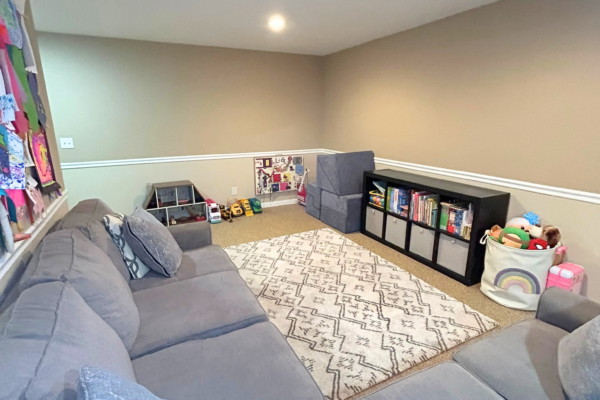
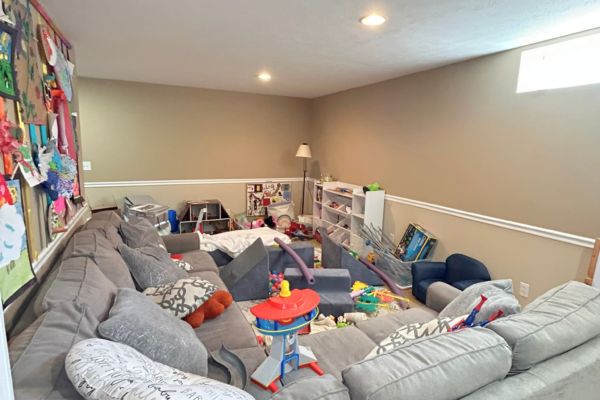
If an adult has to reorganize the room every day, the system is probably too complicated.
Give school papers and projects an exit plan
Schoolwork can quickly become one of the biggest sources of clutter in a child’s room.
Instead of letting papers collect on desks, dressers, and floors, decide what happens to them as they come home.
Separate items that need action from those worth keeping, and give keepsakes a defined amount of space.
Not every drawing, worksheet, or project needs to stay forever. Photograph meaningful projects that are difficult to store, and recycle what no longer needs to be kept.
Review the collection throughout the year instead of waiting until the end of the school year.
Use your best real estate for everyday clothes
Not every part of a closet is equally useful. Use the easiest-to-reach areas for what you wear most:
Everyday zone: Eye-level hanging, accessible drawers, and easy-to-reach shelves.
Secondary zone: Clothing and accessories you use occasionally but still want nearby.
Archive zone: High shelves and less accessible areas for luggage, cold-weather clothing, formalwear, and other infrequent-use items.
This keeps everyday clothing easy to reach without letting rarely used items take over prime space.
Plan for what your child outgrows
Kids’ rooms change quickly.
Clothes stop fitting. Toys lose their appeal. Interests change.
Give those items an exit path before they take over useful storage.
A simple system might include a small place for:
- Clothes that no longer fit
- Toys or books to donate
- Items to pass along
- Things that belong somewhere else in the house
Once that area fills, clear it out. The goal is not to create another permanent storage category. It is to keep outgrown belongings from taking over the room.
Build in a 10-minute reset
Even a well-organized room will get messy.
What matters is whether it can get back in order without becoming a major project.
A quick reset might include:
- Clothes into the closet, drawers, or hamper
- Toys back into their zones
- Backpack and school supplies returned to their place
- Trash and dishes removed
- Surfaces cleared
- Outgrown items moved to the donate or edit area
This is not a deep clean. It is simply returning the room to the system that already exists.
A 10-minute reset once or twice a week is much easier than waiting until the room becomes overwhelming.
Adjust the system as the school year changes
A kids’ room that works in August may not work the same way by January.
Sports add equipment. Clothing sizes change. School supplies accumulate. Hobbies come and go.
Pay attention when:
- Storage starts overflowing
- One area is consistently ignored
- A new activity brings in more belongings
- Clothes no longer fit
- Toys or hobbies change
- The same clutter keeps returning
Before assuming your child is not staying organized, ask whether the system still fits the routine.
Often, a small adjustment is enough.
What to do when the room keeps falling apart
If the same clutter returns after every cleanup, look at the system before adding more containers.
The problem may be:
- Too many belongings for the available space
- Storage that is hard to reach
- Categories that are too complicated
- Items without a clear home
- A room that needs editing
- A closet or storage layout that no longer works
Sometimes the solution is simply removing what your child has outgrown and simplifying the system.
Other times, the physical storage needs to change.
The key is to understand why the room is difficult to maintain instead of reorganizing the same clutter over and over.
A kids’ room should be easy to reset, not impossible to mess up
Kids will use their rooms. Toys will come out, clothes will move around, and routines will change throughout the school year.
A good organization system does not prevent that. It makes it clear where things belong and easier to get the room back in order when life gets busy.
For existing Well Kept clients, Refresh can help maintain the systems already in place as children grow, routines change, and new belongings enter the home.
A well-organized kids’ room gives everything a clear place and makes everyday cleanup easier.
If organization alone is not enough, Well Kept Pro’s Renovate service can create a fully installed system around your wardrobe, your home, and how you use the space.