


Marie Kondo helped popularize a specific way of thinking about decluttering: gather what you own, decide what deserves to stay, and let go of the rest with intention.
That overlaps with professional organizing, but it is not the same thing.
The KonMari method is a defined approach to tidying. A professional organizer starts with the household, the space, and the problem that needs to be solved, then builds a system around how that home actually functions.
Understanding the difference can help you decide whether you need help editing what you own, organizing what stays, or rethinking the storage itself.
What is the KonMari method?
The KonMari method organizes belongings by category rather than room.
The traditional order is clothing, books, papers, miscellaneous items, and sentimental belongings. Each category is gathered together so you can see what you own and decide what deserves to stay.
The method is best known for the idea of keeping items that “spark joy,” with an emphasis on making intentional choices about what remains in your home.
For someone who wants a clear framework for decluttering, that structure can be useful.
What does a professional organizer actually do?
A professional organizer does more than help decide what stays and what goes.
Professional organizing can include:
- Identifying what is not working in a space
- Editing and categorizing belongings
- Deciding where items should live
- Organizing closets, drawers, cabinets, and rooms
- Building systems around household routines
- Recommending or sourcing storage solutions
- Setting up and labeling those systems
- Adjusting the organization as needs change
The process starts with the household rather than a prescribed method.
A family with young children may need very different systems from a seasonal homeowner, someone moving into a new home, or a couple trying to make one shared closet work.
That flexibility is a key difference between a professional organizer and a single organizing method.
To see how Well Kept approaches professional organizing, visit our Approach page.
Where KonMari and professional organizing overlap
There is plenty of overlap between the two.
Both may involve reviewing what you own, deciding what to keep, grouping similar items together, and letting go of things that no longer serve a purpose.
The difference is in how the process is structured.
KonMari follows a defined philosophy and sequence. Professional organizing is typically more flexible, adapting to the household, the space, and the outcome the client wants.
KonMari method vs. professional organizer
| KonMari method | Professional organizing | |
| Starting point | A defined tidying philosophy | The household, space, and goal |
| How the work is organized | Primarily by category | By room, category, routine, project, or whole home |
| Deciding what stays | Focus on what brings joy or value | Considers use, frequency, space, access, lifestyle, and personal value |
| Storage | Comes after deciding what to keep | Often includes storage planning and setup |
| Household routines | Not the primary framework | Often central to the system |
| Implementation | The individual follows the method | May include hands-on organizing, sourcing, setup, and coordination |
| As needs change | Follows the same core method | Systems can be adjusted as routines and priorities change |
Professional organizers work in different ways, so the process can vary by organizer, household, and project.
When the KonMari method may work well
KonMari can work especially well when the main challenge is deciding what to keep.
It may be a good fit if you:
- Want a clear process to follow
- Are ready to review your belongings thoroughly
- Want to reduce how much you own
- Prefer to make each decision yourself
- Connect with the idea of keeping what feels meaningful or useful
For some households, that editing process creates enough space for the rest of the organization to become much easier.
When a professional organizer may be more useful
A professional organizer can be especially helpful when the challenge goes beyond deciding what to keep.
That may be the case when:
- Several people use the same space differently
- Belongings fit, but there is no clear system
- Closets, pantries, garages, or cabinets are difficult to use
- A move creates an opportunity to organize the home from the start
- There is limited time to manage the project
- The same spaces become disorganized again and again
- The physical storage no longer supports how the household lives
A move is a good example. The challenge is often less about getting rid of things and more about deciding where everything should live in a completely new space.
Our 30-day home organization plan for moving to South Florida walks through that process room by room.
Decluttering can create space. Keeping that space functional requires a system.
Once you know what is staying, there are still practical questions to answer:
- Where should this live?
- Who uses it?
- How often is it needed?
- Can the person who uses it reach it easily?
- Is it easy to put away?
- Does the current storage work?
- What happens when new things enter the home?
That is where professional organizing becomes especially useful.
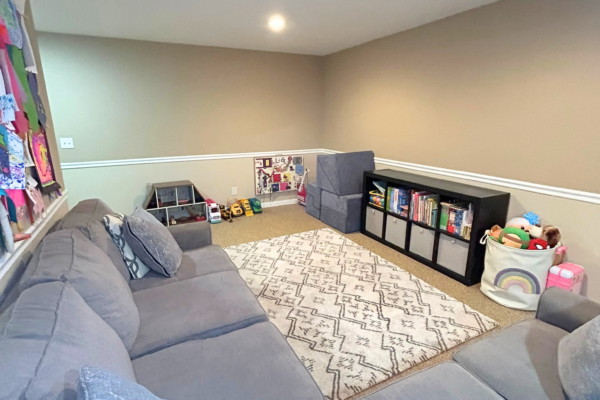
A well-organized home should reflect the routines of the people living there. A kitchen used by a family every day needs a different setup from a seasonal residence. A child’s room needs storage the child can actually reach and maintain.
For a broader look at building practical systems throughout the home, see our South Florida home organization guide.
Decluttering, organizing, and storage are different problems
It helps to identify what is actually causing the frustration.
Too much for the space
If the storage works but there are simply too many belongings for it, decluttering may solve much of the problem.
No clear system
If the amount you own is manageable but counters, closets, and drawers still become chaotic, the issue may be organization.
Items need clear homes based on where and how they are used.
The storage itself does not work
Sometimes the problem is physical.
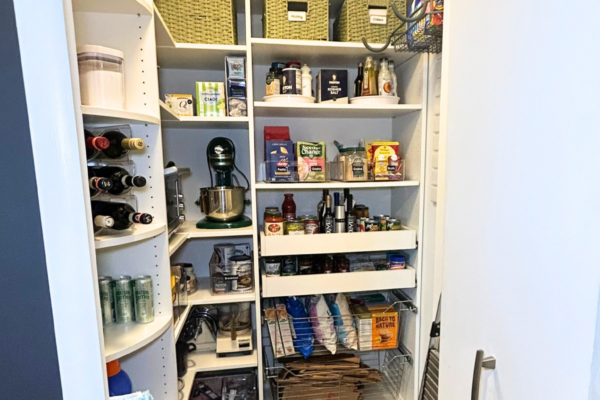
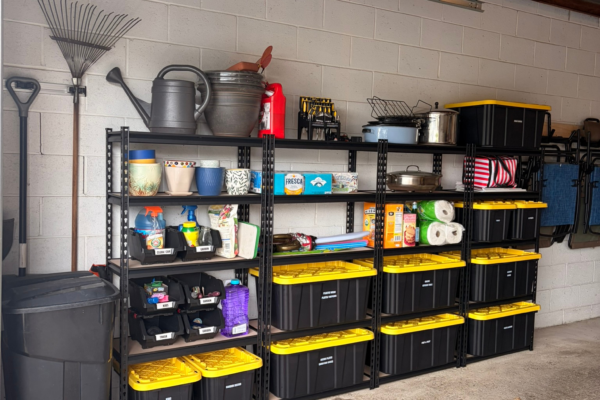
A closet may not have enough hanging space. Pantry shelving may waste usable room. A garage may lack the zones or cabinetry needed for what the household actually stores.
In those cases, reorganizing the same setup will only go so far.
Well Kept’s Reset service works with existing storage, while Renovate is designed for spaces where the storage itself needs to change.

You do not have to follow one organizing philosophy forever
The KonMari method and professional organizing do not have to be opposing choices.
KonMari can be a useful framework for deciding what deserves space in your home. Professional organizing can then help turn what remains into systems that fit the way your household actually lives.
The right approach depends on the problem you are trying to solve.
If the same clutter keeps returning, ask whether the issue is what you own, where it lives, or whether the storage itself works.
Want to see how Well Kept approaches professional organization?