

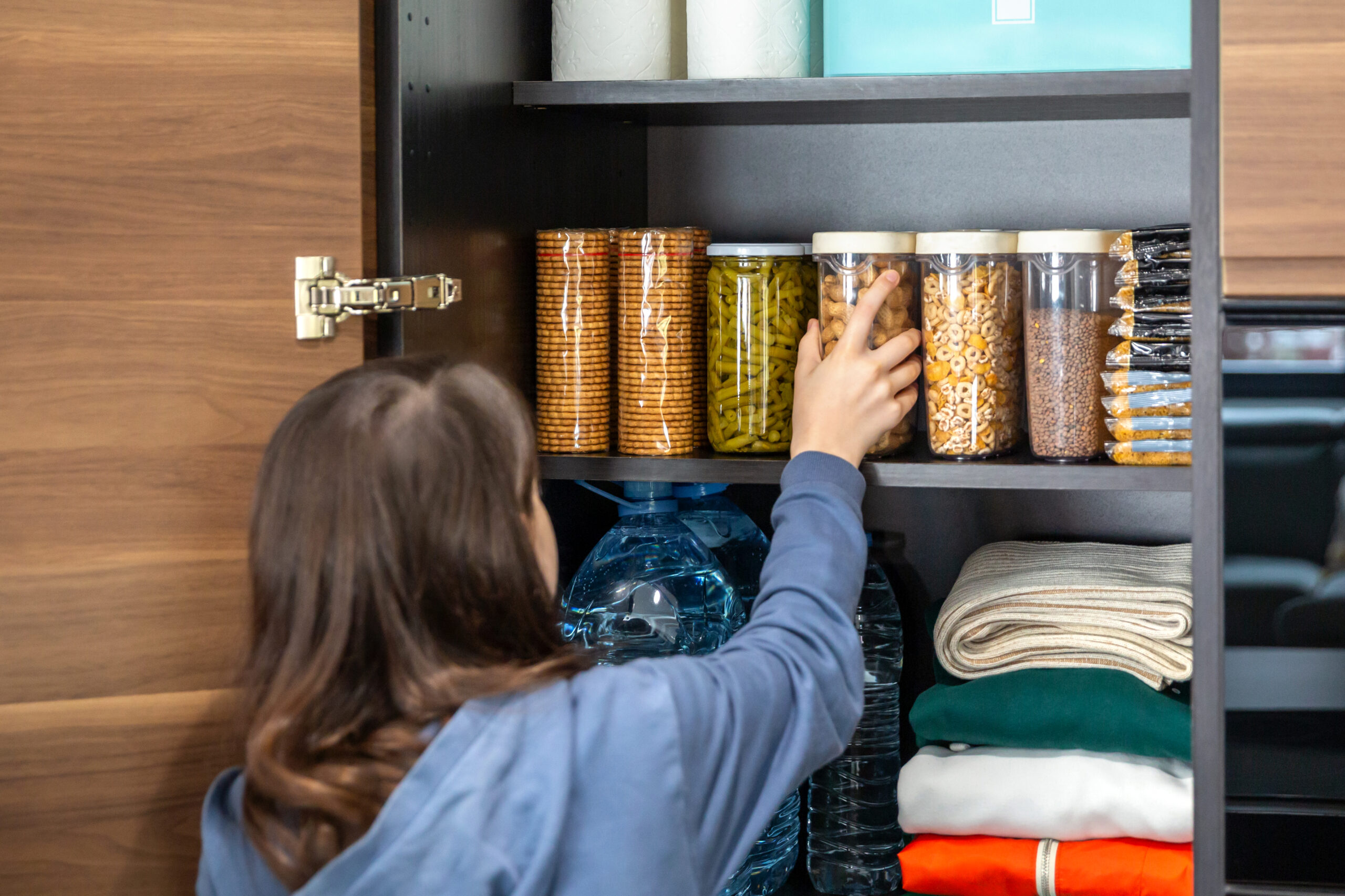
Matching containers. Perfect labels. Everything lined up neatly on the shelf.
It can look beautiful.
It can also create more work than your household wants to maintain.
Good pantry organization is about making the space easier to see, use, and put back together after groceries come home.
The right pantry organization containers, labels, and storage choices should reduce friction, not add another chore.
If they do not make the space easier to use or maintain, they probably do not belong in the system.
What organizing products are actually supposed to do
Bins, baskets, labels, and containers are tools. They should solve a specific problem.
That might mean helping you:
- See what you have
- Keep similar items together
- Define how much of a category the pantry can comfortably hold
- Make frequently used items easier to reach
- Help everyone know where something belongs
If a product does not make the pantry easier to use, it may only make it look more organized.
Containers are especially useful for setting boundaries. A bin should define how much space a category gets, rather than helping you squeeze more into an already crowded pantry.
Our guide to the 80/20 rule for home organization explains why leaving open capacity makes a system easier to maintain.
When pantry containers make sense
Containers are most useful when they create clarity.
They can work especially well for:
- Individually packaged snacks
- Baking supplies
- Small packets that disappear on shelves
- Categories that tend to spread across the pantry
- Deep shelves where smaller items get lost
- Products that are easier to access when grouped together
The key is to use the container to define the category.
If snacks get one bin, that bin shows you how much space snacks get. When it is comfortably full, it may be time to use what you have, remove duplicates, or decide whether everything in the category still deserves the space.
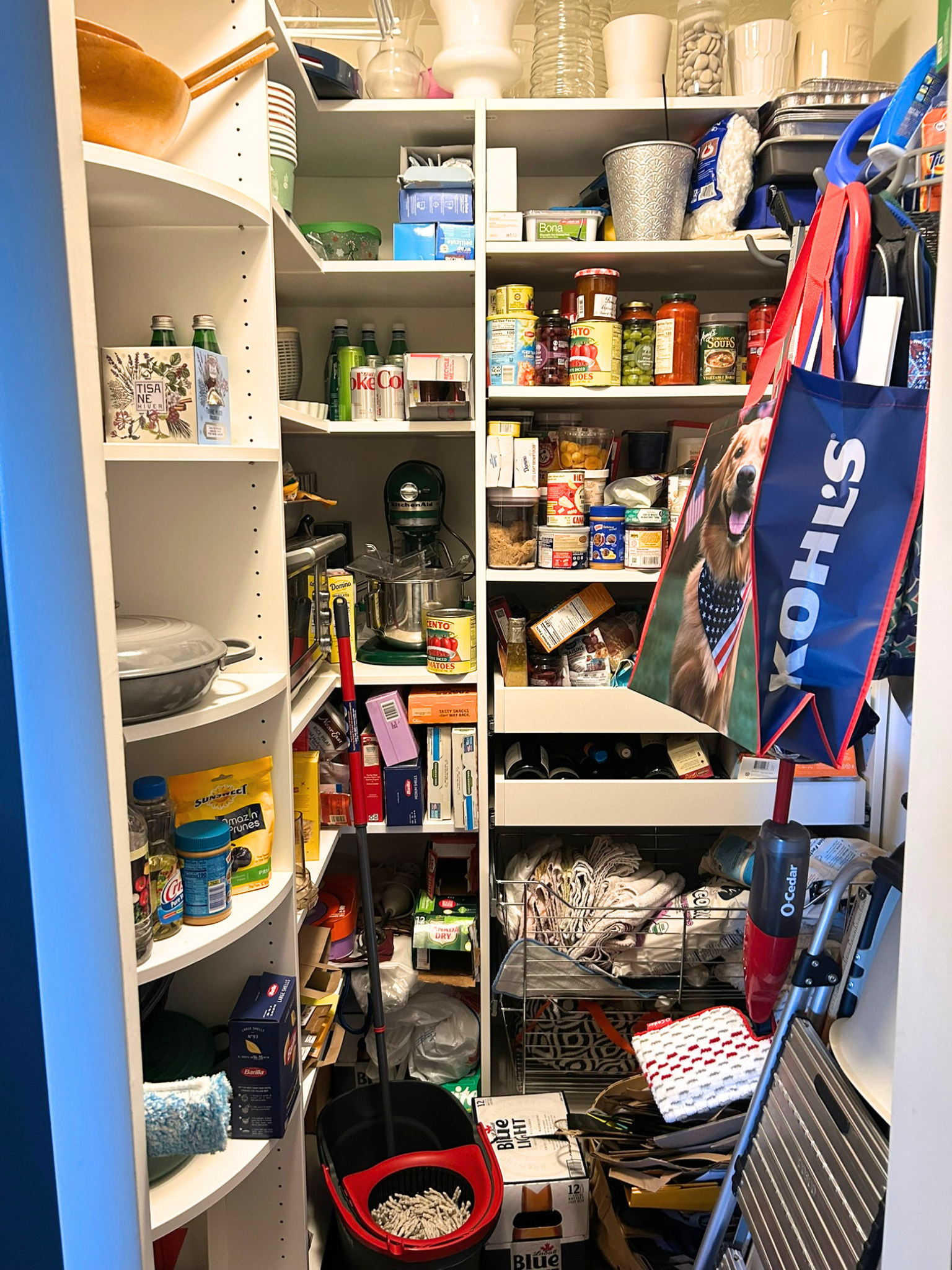
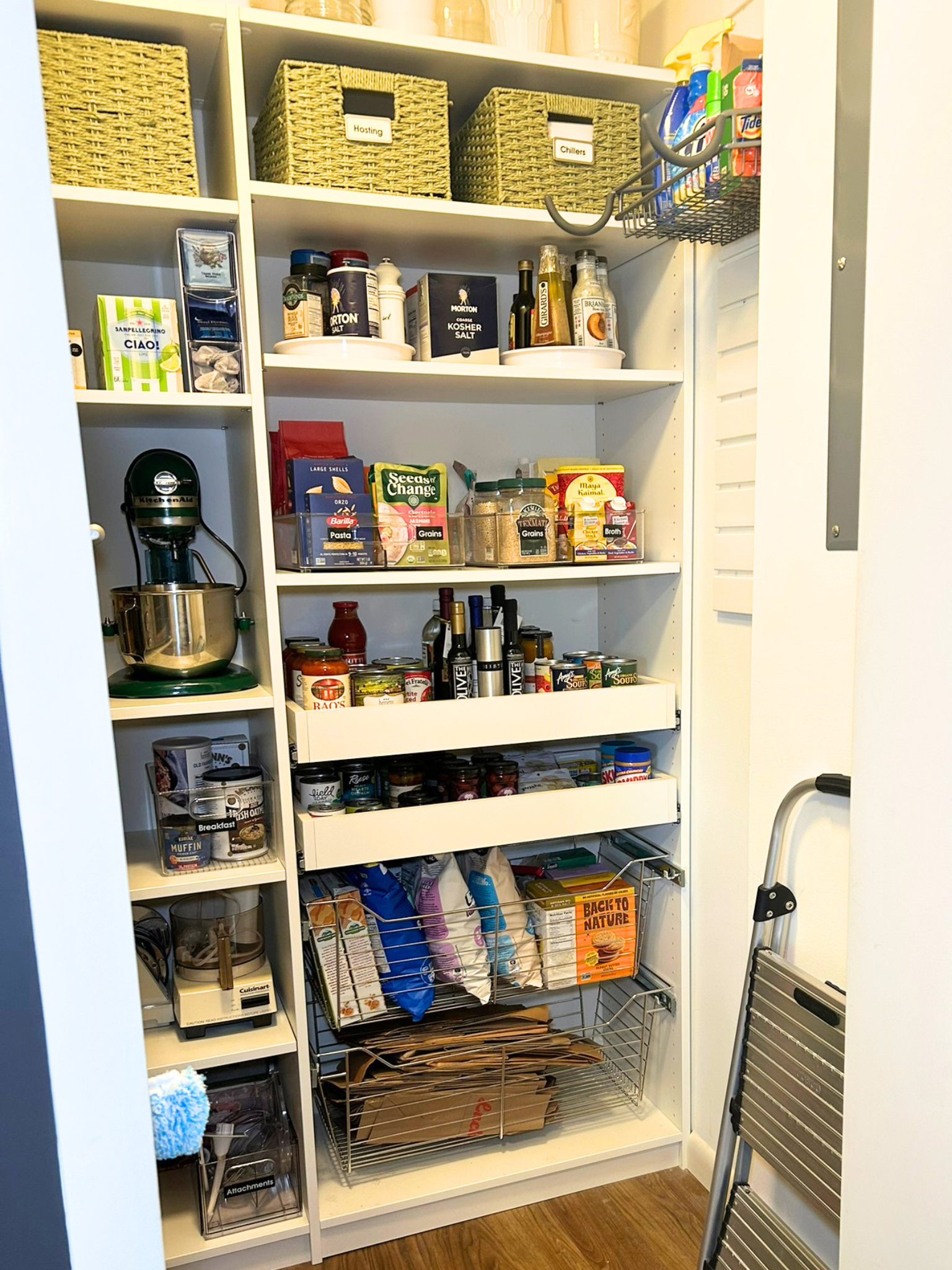
What to look for in pantry organization containers
The best container depends on what you are storing and how you use it.
Look for containers that:
- Fit the depth and height of the shelf
- Make the contents easy to see or access
- Are simple to remove, refill, and clean
- Are large enough for the category without becoming a catch-all
- Allow frequently used items to be reached easily
- Protect the contents appropriately when a sealed container is useful
Avoid buying a full matching set before you know what each container needs to hold.
Measure the pantry, define the categories, and choose products around the space that already exists.
In South Florida, storage also needs to account for humidity and pantry conditions. Our South Florida pantry organization checklist covers those considerations in more detail.
When decanting helps, and when it creates more work
Decanting means taking food or household products out of their original packaging and transferring them into another container.
It can work well when:
- You buy dry goods in bulk
- Original packaging is awkward or difficult to reseal
- Several partial packages can be consolidated
- You want to see quickly how much is left
- A frequently used staple is easier to scoop or pour
Flour, rice, cereal, baking staples, and some snacks can all work well this way.
But decanting adds another step to the grocery routine.
It may not make sense when:
- Products turn over quickly
- Nobody consistently refills the containers
- Original packaging includes useful cooking or expiration information
- Similar products become harder to distinguish
- You regularly buy different sizes or varieties
- The container takes up more space than the original packaging
If groceries regularly sit beside empty containers because nobody wants to refill them, the original packaging may work better.
If the extra step makes the pantry harder to maintain, skip it.
When pantry labels help, and when they do not
Labels can make a pantry easier to maintain, especially when several people use the same space.
They are useful when:
- Categories are not immediately obvious
- Similar containers hold different items
- Several people put groceries away
- A category tends to migrate
- You want the pantry to return to the same setup after each grocery trip
A good label answers one simple question:
Where does this go?
Keep categories simple. “Snacks” may work better than several highly specific labels that nobody remembers.
Labels add less value when the contents are obvious or the container already makes its purpose clear. A clear bin filled with paper towels probably does not need a label that says “paper towels.”
Use labels where they reduce confusion and help the household maintain the system.
Build the system around the people using it
A pantry can look perfect on the day it is organized and still fall apart after the next grocery trip.
The real test is whether the household can maintain it.
Ask:
- Will groceries actually get decanted?
- Can children reach the categories they use?
- Can everyone tell where things belong?
- Can items be put away in one or two simple steps?
- Is there enough room for the category to grow between grocery trips?
- Does the pantry still work when it is busy?
Before buying another product, ask what problem it solves and whether it will make the pantry easier to use every day.
If the household keeps ignoring the setup, the system may be asking too much.
For a deeper look at why organizing systems break down, see why your home won’t stay organized.
When products are not enough
Sometimes the pantry does not need better containers. It needs a better system.
That may be the case when:
- Shelves are consistently over capacity
- Categories spill into neighboring areas
- You keep buying duplicates because you cannot see what you have
- The pantry is holding too many unrelated categories
- Groceries end up on counters because there is nowhere else to put them
- You have added products without creating more usable space
At that point, another bin may simply organize the problem.
The pantry may need to be edited, rezoned, or reorganized around the way your household actually shops and cooks.
If the same problems keep returning throughout the home, see 5 signs your home needs more than a tidy-up.
What professional pantry organization looks like
A professional organizer should start with how the pantry needs to function.
That means asking:
- What does the pantry actually need to hold?
- How does the household shop?
- What gets used most often?
- Which categories are consistently over capacity?
- Where does the current setup create friction?
- Which products would genuinely make the space easier to use?
Once those questions are answered, containers, labels, and storage choices can support the system.
That is the difference between decorating a pantry and designing one around the household.
Well Kept Pro’s Reset service is designed for one space or a few connected rooms that need a better system.
Make the pantry easier to use, not harder to maintain
Matching containers can be useful. So can labels and decanting.
None of them are required for an organized pantry.
The best system makes it easier to see what you have, find what you need, put groceries away, and maintain the space over time.
If your pantry needs more than a few new containers, explore Well Kept Pro’s Reset service or schedule a consultation to talk through what is not working.
Give your home room to change
You do not need exactly 20% empty space in every drawer, shelf, or closet.
You do need enough breathing room for the system to keep working.
The pantry needs space for groceries. The closet needs room for something new. The garage needs enough open capacity that putting one item away does not require moving five others first.
Empty space gives your home flexibility.
If your storage is already packed and you are constantly rearranging belongings just to make things fit, Well Kept Pro can help determine whether the answer is editing, a better system, or a larger storage change.
Explore Well Kept Pro’s services to see whether Reset, Renew, or Renovate fits your project, or schedule a consultation to talk through what is not working in your home.