

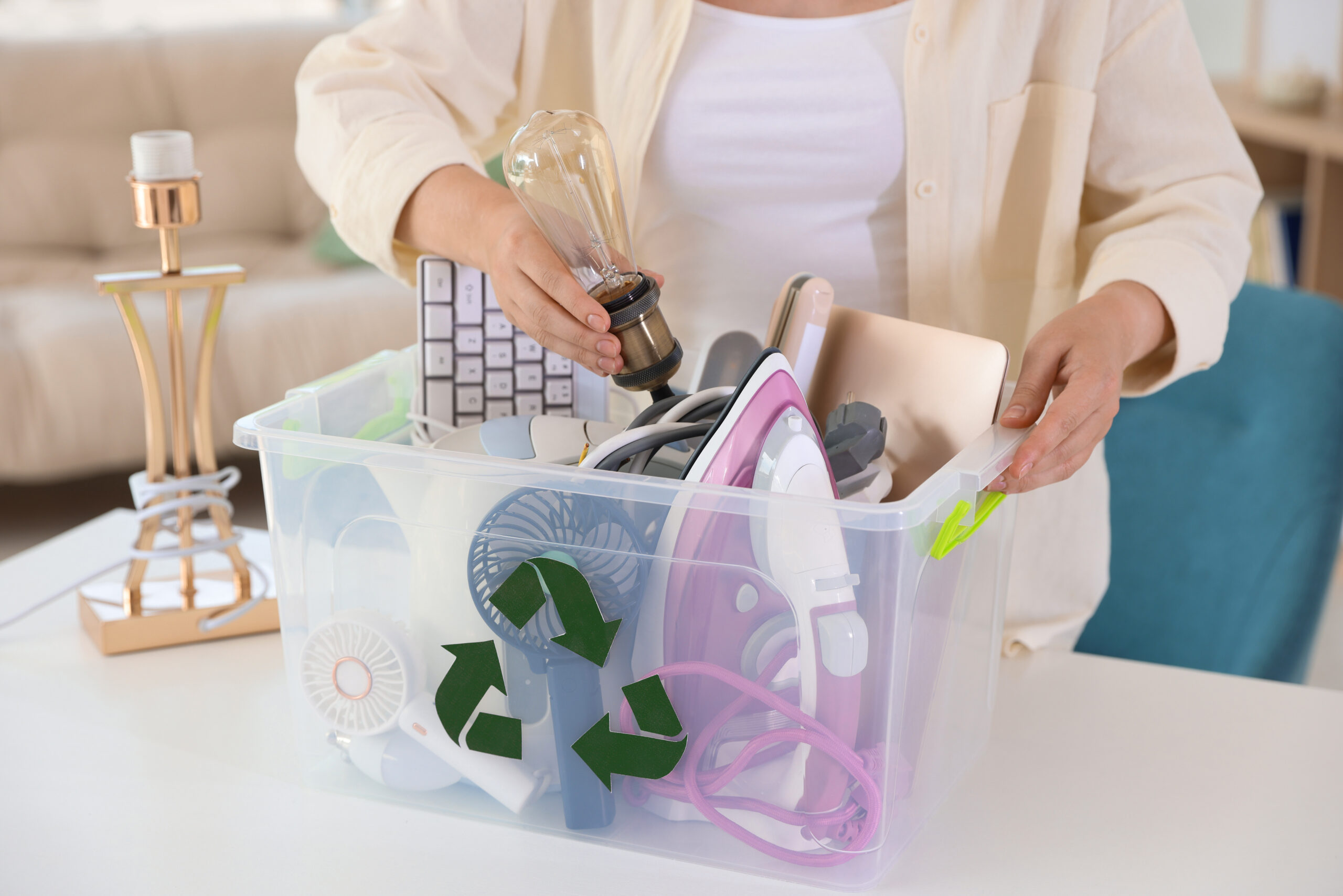
The closet is full even after you reorganize it.
You buy something you already own because you cannot find the original. The garage keeps absorbing overflow. Putting away one new item means rearranging five others.
At some point, the issue may be less about organization and more about how much the home is trying to hold.
Learning how to declutter your home starts with recognizing when your belongings are making everyday spaces harder to use.
That becomes especially important before a move or downsizing project, but you do not need to be moving to benefit from having less to manage.
Sometimes creating a better-functioning home starts with deciding what still deserves space in it.
5 signs it may be time to declutter
You do not need to wait until every closet is overflowing.
The way your home functions day to day can tell you when it is holding more than the space comfortably supports.
1. You have to move things to reach other things
A shelf can technically hold everything and still be too full.
If you regularly have to remove one stack to reach another, move bins to open a cabinet, or rearrange clothes just to put something away, the space is over capacity.
Storage should make belongings easy to see, reach, and put back without having to move everything around first.
2. You regularly discover duplicates
You find three bottles of the same cleaning product. Two nearly identical shirts. Pantry items you forgot you bought.
Duplicates often build up when you cannot easily see what you already own.
That can mean similar items are scattered across several places or the storage is too crowded to keep the category visible and easy to manage.
3. One room is storing another room’s overflow
The garage holds things that no longer fit inside.
The guest room becomes long-term storage. Pantry overflow moves onto kitchen counters. Clothes leave the closet and start living in the bedroom.
When one room repeatedly absorbs another room’s belongings, the original space may already be over capacity.
Before adding more storage somewhere else, look at what the space is being asked to hold and whether everything still belongs there.
For a deeper look at recurring overflow, see why your home won’t stay organized.
4. Every new purchase requires rearranging
A healthy storage system needs some open capacity.
If bringing home groceries, clothes, household supplies, or another kitchen tool means rearranging what is already there, the category may already be at its comfortable limit.
Our guide to the 80/20 rule for home organization explains why leaving breathing room makes storage easier to use and maintain.
5. You spend time managing things you rarely use
Belongings require attention even when you are not using them.
They still have to be stored, moved, cleaned, sorted, repaired, or worked around.
If you are spending time and space maintaining things you rarely use, ask whether they still fit your life and deserve the room they take up.
Decluttering and organizing solve different problems
Decluttering is deciding what still deserves space.
Organizing is deciding where what remains should live and how the space should work.
The order matters.
If you organize before deciding what still belongs, you can end up buying more bins, adding more shelving, and building complicated systems around categories that are simply too large.
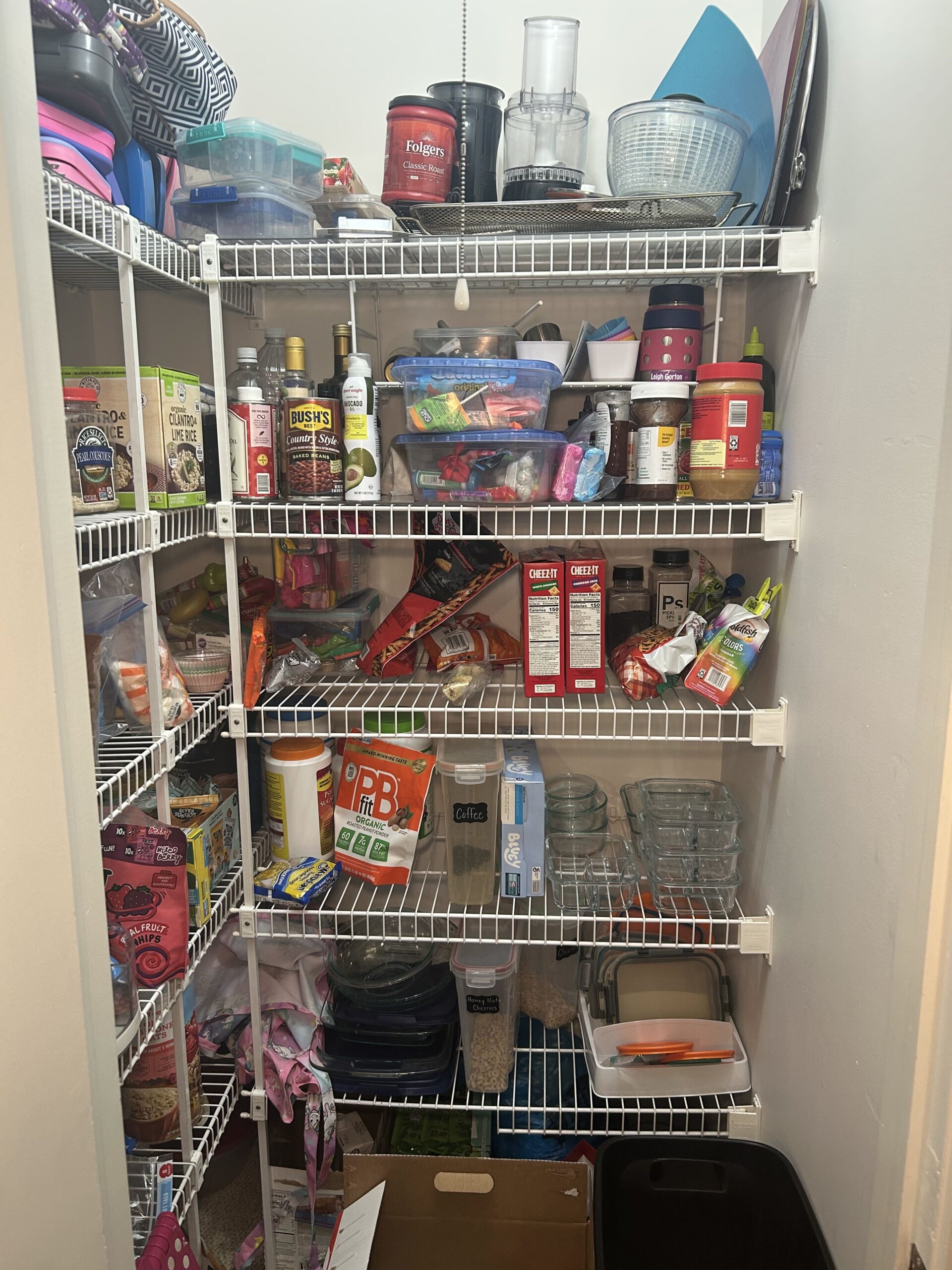
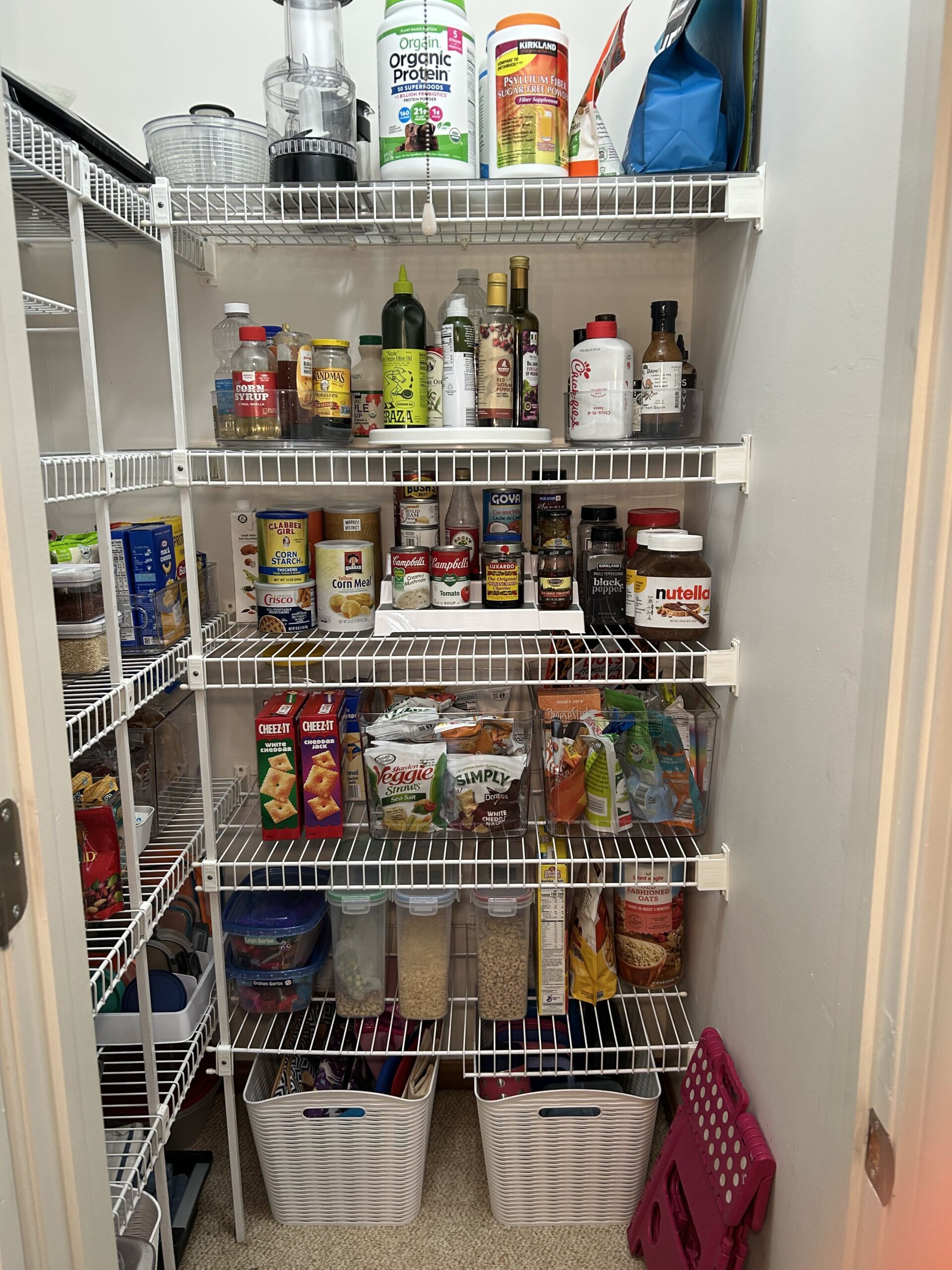
A pantry is a good example.
Another container may make the shelf look better, but it will not solve an overfilled category. Sometimes the better decision is to use what you have, remove duplicates, or reduce how much space the category needs.
Our guide to pantry organization containers, labels, and decanting explains when organizing products improve a system and when they create more work.
Why decluttering matters before downsizing
Moving into a smaller home makes storage limits harder to ignore.
A larger home can hold belongings you have not used in years without forcing a decision. A smaller footprint usually cannot.
Before downsizing, ask:
- What do I actually use?
- What fits the way I live now?
- Which furniture will work in the new home?
- Which duplicates still make sense?
- Which sentimental belongings deserve permanent space?
- What am I keeping mainly because I currently have room for it?
Making those decisions before the move can simplify everything that follows.
Every item you let go of is something you do not have to pack, move, unpack, find space for, and organize again.
If you are moving locally or relocating to the area, our 30-day home organization plan for moving to South Florida covers how to make storage decisions as you settle into a new home.
How to declutter your home when the whole house feels full
When several rooms need attention, do not start with the most emotional belongings.
Begin with higher-volume categories where the decisions are usually easier, such as:
- Expired pantry food
- Duplicate toiletries and household supplies
- Clothing that no longer fits your current lifestyle
- Excess towels and linens
- Duplicate kitchen tools
- Garage overflow
- Items tied to routines or hobbies you no longer have
These categories can free meaningful space before you get to photographs, heirlooms, and other sentimental belongings.
If several spaces are connected, it can also help to tackle the project in a focused way rather than working through one drawer at a time for months.
Seeing more of the home at once makes it easier to spot duplicates, understand where categories belong, and make decisions once.
See why organizing a little at a time doesn’t always work for more on when a room-by-room approach starts to stall.
Use the next version of your life as the filter
Decluttering can become easier when you stop asking whether an item is still usable and start asking whether it belongs in the life you are building now.
Consider:
- Will I use this in the home I am creating?
- Would I buy this again today?
- Do I already own something that serves the same purpose?
- Is it worth the space it requires?
- Am I keeping it because I use it, or because I have room for it?
- Does it fit my current routines?
This is especially useful during a transition.
Children leave home. Work changes. A household downsizes. A seasonal home becomes a primary residence. Hobbies and routines shift.
Your home should be able to change with you.
Leave enough room for the home to work
Once shelves and closets begin opening up, it can be tempting to fill them again with organizing products.
Give the space room to breathe first.
A successful decluttering project should leave you with:
- Better visibility
- Easier access
- Fewer categories competing for the same storage
- Room for normal purchases and household changes
- A clearer understanding of what belongs where
Open space is useful. You do not need to maximize every shelf just because it is available.
The result should also show up in everyday life.
You should be able to open the closet without moving clothes out of the way. You should know what is in the pantry before going to the store. Counters should stop acting as overflow storage.
Putting something away should have an obvious answer.
You should spend less time searching, rearranging, and fixing the same spaces.
That is when decluttering changes more than the amount you own. It changes how the home works.
When professional decluttering help makes sense
Some decluttering projects are straightforward.
Others involve years of belongings, several connected rooms, a move, or decisions that have been postponed for a long time.
Professional help can make sense when:
- Several rooms or the whole home need attention
- You are preparing to downsize or move
- The project has stalled because there are too many decisions
- You have already reorganized without reducing what the home needs to hold
- One room’s overflow is affecting other spaces
- You are working toward a deadline
- You want the remaining belongings organized once the editing is finished
A professional organizer can help structure the decision-making process, evaluate how much each space can comfortably hold, organize what remains, and build systems around the way you actually live.
If you are considering professional help, see how much a professional organizer costs for more on scope, pricing, and what different levels of service can include.
Make room for the home you actually want to use
Decluttering creates room.
Organization determines how that room should work.
If your home is consistently over capacity, the first step may be deciding what still deserves space before trying to organize everything more efficiently.
Well Kept Pro’s Renew service is designed for larger and whole-home organization projects where several spaces need to work together.
Explore Well Kept Pro’s services or schedule a consultation to talk through what is not working and what you want the home to make easier.