

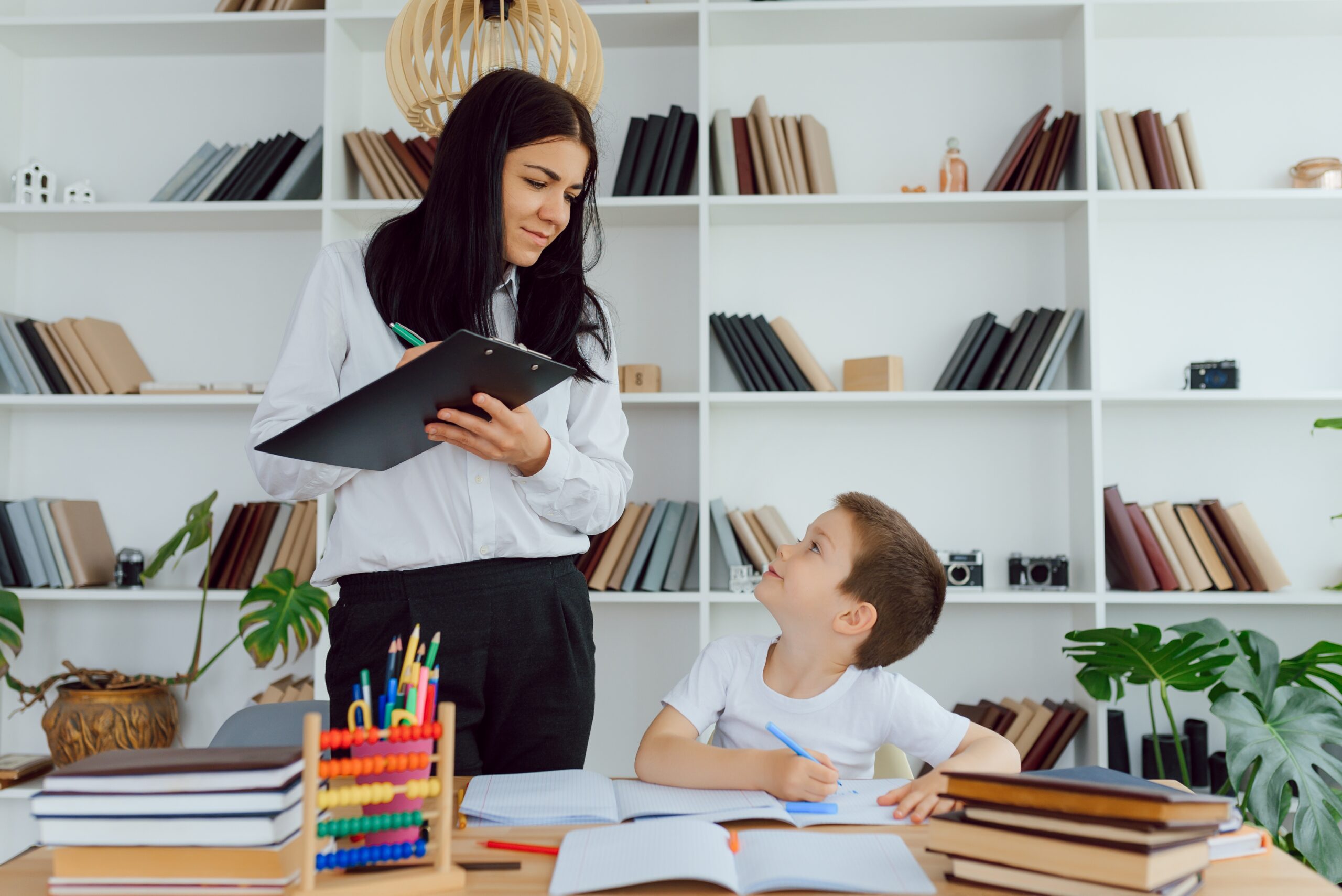
A homeschool space does not need to look like a classroom.
It might be a dedicated room, one side of the dining room, a bookshelf in the family room, or a few areas throughout the house.
Good homeschool organization makes learning materials easy to find, gives children appropriate access to what they use, and helps the space return to everyday family life when school is finished.
Start with how your family learns at home, then build the storage around that routine.
Start with how your child actually learns
Before buying a desk, rolling cart, bookshelf, or set of bins, pay attention to how the school day actually works.
Ask:
- Where does focused written work happen?
- Where does your child prefer to read?
- Which materials are used every day?
- What can they access independently?
- Which supplies require adult help?
- Do siblings work together or need separate areas?
- What needs to be put away when school is finished?
Those answers should shape the space.
A child who moves between the kitchen table, couch, and floor may benefit more from portable storage than a permanent desk. A family with several children may need a mix of shared supplies and clearly assigned materials.
Well Kept Pro’s family home organization approach follows the same principle throughout the home: build systems around how the family actually functions.
Organize materials by how they are used
A homeschool area gets crowded quickly when the entire school year is kept within reach.
Start by separating materials based on when they are needed.
Everyday
Keep current curriculum, notebooks, pencils, and frequently used books easy to reach.
Current unit
Give books, projects, manipulatives, and supplies for the current topic a defined place nearby.
Rotation and future materials
Move future curriculum, extra supplies, completed units, and rarely used materials into secondary storage.
Within those groups, keep similar supplies together so you can see what you already have. Useful categories might include writing supplies, art materials, paper, science materials, manipulatives, technology accessories, and backstock.
Use containers to define those categories rather than letting them expand indefinitely. One bin of markers may be useful. Three overflowing bins may mean the category needs editing before you add more storage.
Our guide to pantry organization containers, labels, and decanting applies the same principle: containers work best when they create useful boundaries, not just more capacity.
For younger children, keep age-appropriate materials where they can comfortably reach them. Broad categories and picture labels can make the system easier to follow. Keep anything requiring adult supervision in a separate location.
With multiple children, separate shared materials from individual ones. Art supplies, paper, and reference materials might live in a common area, while each child has a defined shelf, bin, or drawer for current curriculum and personal work.
Our guide to kids’ rooms that stay organized uses the same approach to child-accessible storage throughout the bedroom.
Give work in progress somewhere to go
Homeschool work is not always finished in one sitting.
Worksheets, books, art projects, and assignments can quickly spread across tables and counters when they still need attention.
Give each child one defined place for active work, such as:
- A tray
- A basket
- A file box
- A cubby
- A drawer
- A vertical file holder
Then use a simple progression:
Working on it → finished → keeping → leaving
Completed work should move into the family’s record-keeping system, become a keepsake, or leave the active school area.
Without that next step, finished schoolwork can quickly become household clutter.
Build a reset into the end of the school day
A homeschool setup is easier to manage when school has a clear ending.
A five- or ten-minute reset might include:
- Books back on the shelf
- Current work into its tray
- Supplies returned to their categories
- Trash and recycling cleared
- Technology plugged in
- Shared tables or counters cleared
Give children the steps they can reasonably handle themselves.
The routine should be simple enough to become part of the school day, especially when the space also needs to return to dinner, play, work, or other family use.
Florida homeschool families may have funding options
Florida families may also want to explore the Personalized Education Program (PEP) Scholarship through Step Up For Students.
The program provides eligible students with an education savings account for approved educational expenses. The current purchasing guide includes certain at-home classroom furnishings, including bookshelves and storage or organization containers.
Eligibility, approved expenses, and provider requirements can change. Review the PEP Scholarship and PEP Purchasing Guide before making a purchase or hiring a provider.
When the homeschool setup starts affecting the whole house
Sometimes the problem is bigger than one crowded cart or bookshelf.
Look at the broader system if:
- Curriculum is spread across several rooms
- The dining table rarely returns to normal use
- Supplies are lost or repurchased
- Siblings’ materials get mixed together
- Finished work has nowhere to go
- Storage keeps expanding without improving the space
- One parent is constantly resetting everything
At that point, the school-day workflow may need to be reorganized, not just the storage.
For a deeper look at recurring household friction, see why your home won’t stay organized.
What professional homeschool organization can help with
A professional organizer focuses on the environment around learning, not the curriculum itself.
That can include:
- Defining homeschool zones
- Organizing curriculum, books, and supplies
- Creating child-accessible storage
- Setting up systems for current and completed work
- Separating shared and individual materials
- Sourcing useful storage products
- Making multipurpose rooms easier to reset
- Connecting the school setup with the rest of the family’s routines
For South Florida families whose homeschool materials have spread across the home, reorganizing the space can make the school day easier to start, manage, and finish.
Learn more about Well Kept Pro’s family home organization services.
For a focused homeschool space or a few connected areas, Reset may be the right fit.
Build a homeschool space that can return to being home
Good homeschool organization should make it easier to start the school day, find what you need, work independently, and put everything away afterward.
The space does not need to look like a traditional classroom. It needs to work for the child, the parent, and the rest of the home.
Learn more about family home organization with Well Kept Pro or schedule a consultation to create a homeschool setup that works with the way your family lives.